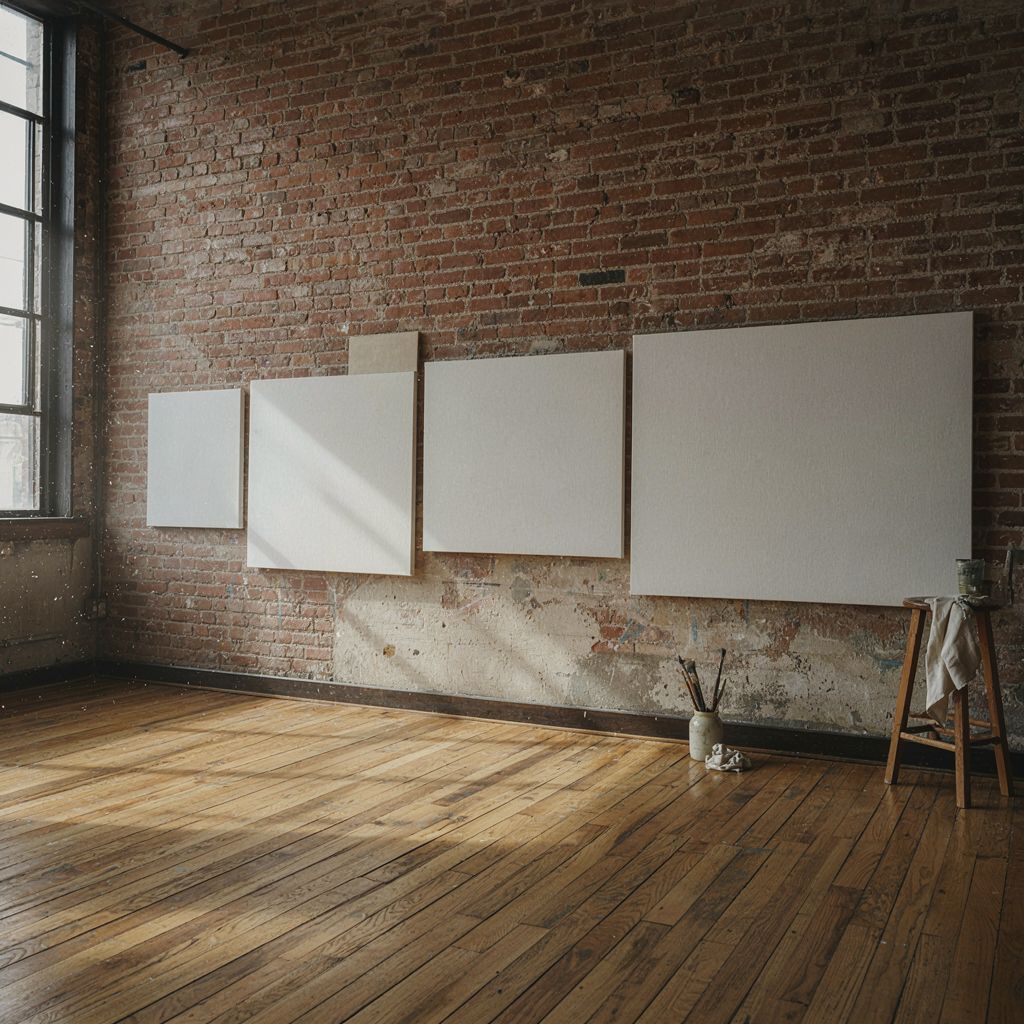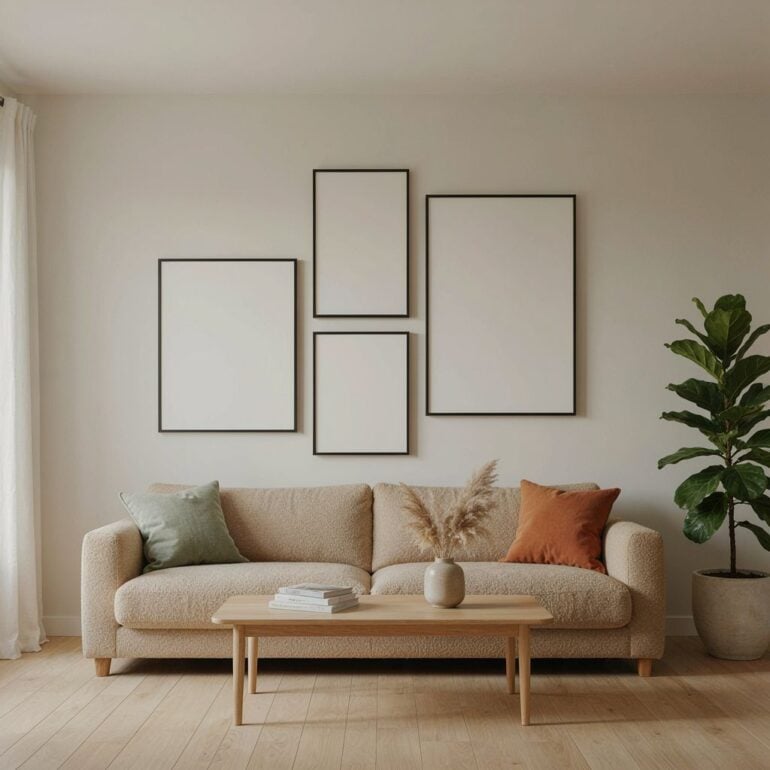

If your For You Page has looked a little more like an art gallery lately, you’re not imagining it. Gallery walls, oversized statement canvases, and framed prints that actually look intentional — not the mass-produced motivational poster your dorm roommate had — have quietly become one of the most consistent home and apartment trends across TikTok and Pinterest over the past couple of years. And unlike a lot of decor trends that fade the second the algorithm moves on, this one seems to be sticking around, for reasons that have less to do with aesthetics and more to do with how people are actually decorating now.
Why now?
Part of it is generational. Renters — especially younger ones moving through smaller apartments more often than previous generations did — have gotten a lot more comfortable treating decor as something portable and personal rather than tied to a “forever home” they’re not planning on having anytime soon. Big furniture is a commitment. A canvas print or a framed poster is not. You can build a whole wall’s worth of personality in an apartment, take it down when you move, and put it right back up somewhere new — which makes wall art one of the few decor categories that scales down to a studio apartment and up to an actual house without losing its impact.
The other part is that “wall art” doesn’t mean what it used to. A few years ago, the category was mostly generic prints bought in bulk from a big box store — the kind of art that was clearly chosen because it was inoffensive and cheap, not because anyone actually loved it. What’s changed is access: it’s now genuinely easy to turn a photo, a piece of original art, a favorite album cover, or literally anything you want printed into a real, well-made canvas or framed print, at a price that doesn’t require a trip to a custom framing shop. Print-on-demand — the same technology that made custom t-shirts and mugs a two-click purchase — has quietly done the same thing for wall art, and the result is a lot more people hanging things that actually mean something to them instead of whatever matched the couch.
The gallery wall specifically
If there’s one format driving the trend, it’s the gallery wall: a cluster of multiple prints, usually mismatched sizes and sometimes mismatched frame styles, arranged together instead of one single statement piece. It photographs well, which is presumably part of why it’s everywhere on social media, but it’s also just a genuinely good way to solve a real decorating problem — a big blank wall is intimidating to fill with one purchase, and a gallery wall lets you build it up incrementally instead of committing to one expensive centerpiece.
It also rewards exactly the kind of print-on-demand access described above. A gallery wall works best with a mix of formats — maybe a large framed canvas as the anchor piece, a couple of smaller matte prints around it, one metal print for texture — which used to mean sourcing from several different places. Specialist print-on-demand suppliers built specifically around wall art (rather than treating it as one SKU among fifty unrelated products) have made that mix achievable from a single order: multiple materials, multiple finishes, multiple frame styles, without needing to piece it together from three different vendors. One such wall-art-only supplier offers everything from stretched canvas to peel-and-stick wallpaper to metal prints from a single catalog — exactly the kind of range a gallery wall benefits from.
The format actually matters more than people think
Not all wall art reads the same way, and part of what’s driving the current wave is that people are getting more specific about matching the format to the mood instead of defaulting to “poster in a frame” for everything.
Canvas prints — especially stretched canvas without a visible frame — read as more art-gallery, more permanent. They’re the pieces that tend to work best as a single large statement over a couch or a bed, the kind of purchase that anchors a whole room rather than filling a gap. Framed prints, by contrast, feel more curated and more collectible, which is part of why they dominate gallery-wall arrangements — a mix of frame styles and sizes is what makes the cluster look assembled over time rather than bought in one trip, even if it technically was. Metal prints have become the trend piece within the trend: something about the reflective, slightly industrial finish reads as more contemporary, and they’ve shown up a lot in the more minimalist, modern-apartment aesthetic that’s been trending alongside the maximalist gallery-wall look. And peel-and-stick wallpaper — technically a wall art category on its own now — has become the go-to for renters who want to commit to a full accent wall without the security-deposit risk of actual paint or adhesive wallpaper.
The practical upshot: if you’re building out a space and trying to decide what to actually buy, it’s worth thinking about the format before the image. The same piece of art can read completely differently as a giant canvas versus a small framed print versus a metal print, and a lot of the “why doesn’t my wall look like the inspiration photo” problem comes down to format mismatch rather than a bad art choice.
What this means if you’re actually trying to do this
If you’re looking at your own blank wall and feeling inspired, the practical advice that comes up again and again from people who’ve actually built a good gallery wall: don’t buy everything at once, mix at least two different formats (a canvas and a framed print look different enough to avoid feeling repetitive), and don’t be afraid of asymmetry — a slightly uneven arrangement usually reads as more intentional than a perfectly even grid, somewhat counterintuitively.
The bigger picture here is that “wall art” quietly stopped being an afterthought purchase and became one of the more personal, most customizable parts of how people are decorating their spaces — which, if the trend lines (and the FYP) are any indication, isn’t going away anytime soon.