
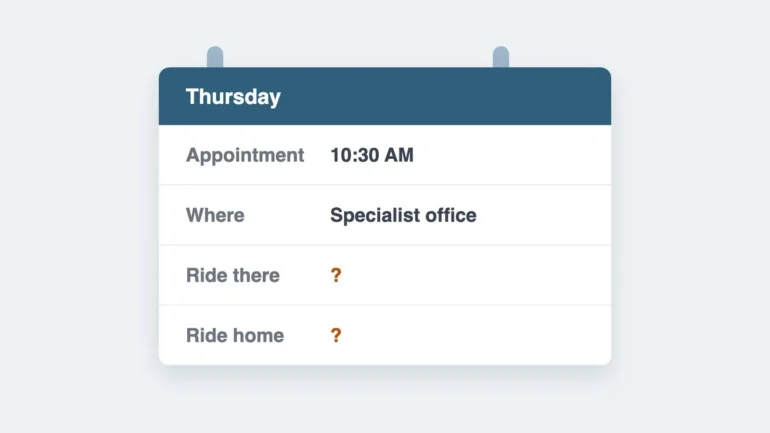

The appointment is on the calendar. The ride often is not.
The conversation about giving up the car keys gets most of the attention. The harder part usually comes a few weeks later, when a parent who no longer drives has a Tuesday morning cardiology follow-up and nobody in the family is free.
Doctor visits are where a driving gap shows up first. They are scheduled, they are not optional, and they tend to land in the middle of a workday. Families who plan for them early avoid a lot of last-minute scrambling.
The Years Without a Car Are Longer Than Most People Expect
Stopping driving is not a short phase. In a 2002 study on driving life expectancy published in the American Journal of Public Health, Foley and colleagues estimated that men who were still driving at ages 70 to 74 would depend on other transportation for about 7 years of their lives. For women of the same age, the estimate was about 10 years.
The same team estimated that more than 600,000 people age 70 and older stop driving each year in the United States. That is a large group of households working out, often for the first time, how a parent will get to appointments.
Years of rides add up. They cover routine checkups, lab work, imaging, specialist referrals, and recovery visits after a hospital stay.
Age Is Not the Main Risk. Mobility Is.
One finding surprises families. A 2020 study in the American Journal of Public Health, based on the National Health Interview Survey, found that 5.8 million people in the United States, or 1.8 percent, delayed medical care in 2017 because they did not have transportation. That number was up from 4.8 million in 1997.
Older age alone did not drive the problem. Adults 65 to 74 delayed care because they lacked a ride at a rate of 1.7 percent, and adults 75 and older at 1.8 percent, about the same as everyone else.
The gaps were much wider among people with health and money barriers. The rate was 3.7 percent for people with a functional limitation, 6.9 percent for people who had ever had a stroke, and 7.0 percent for people living below the poverty line.
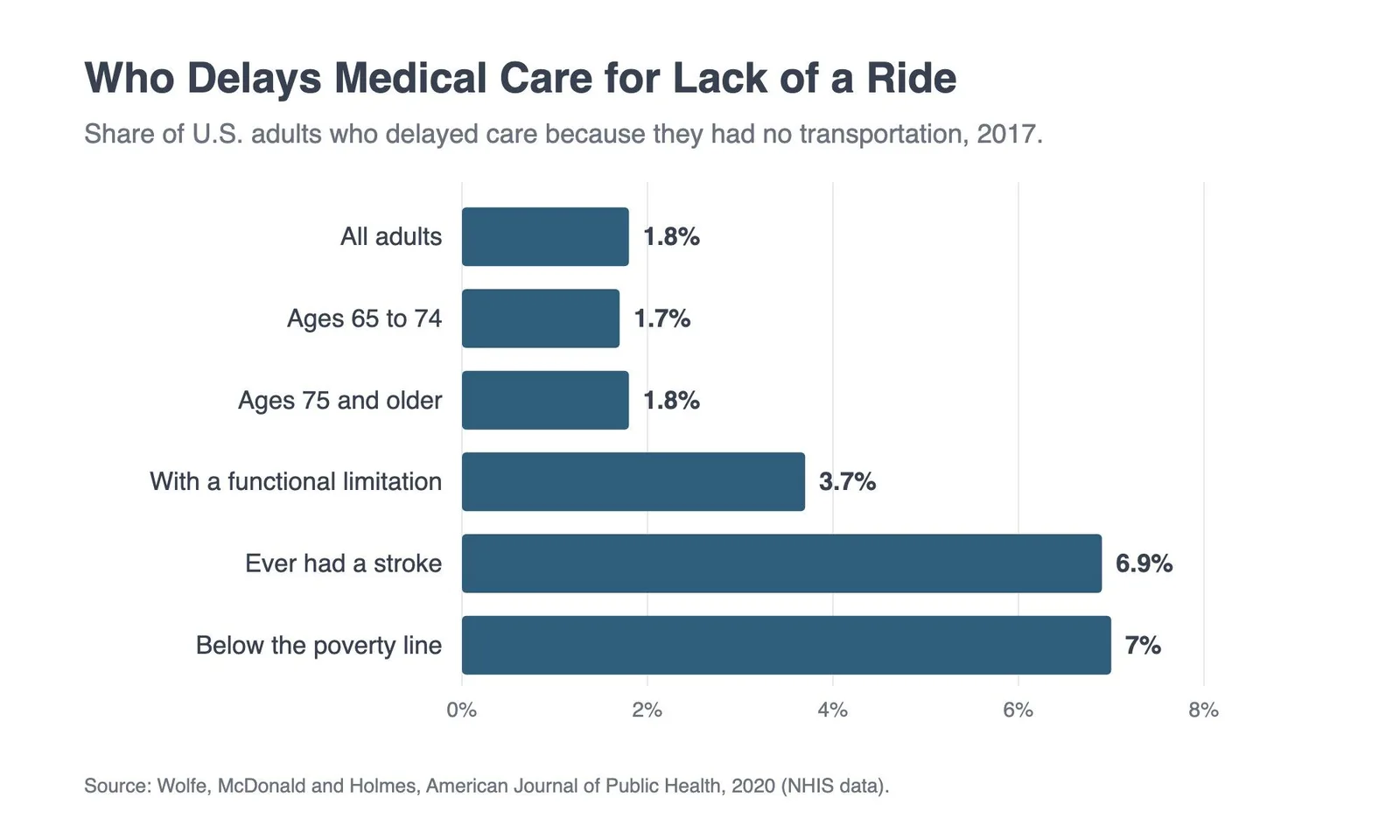
Health and income barriers matter more than age alone.
After adjusting for other factors, people with a functional limitation had about 2.6 times the odds of delaying care because of a lack of transportation. For families, the takeaway is practical: a parent who uses a walker, cane, or wheelchair needs more than a lift. The real job is help from the front door to the exam room.
The Need Is Growing Close to Home
In the Baton Rouge area, the number of older residents keeps climbing. U.S. Census Bureau estimates put East Baton Rouge Parish residents age 65 and older at 65,649 in July 2020 and 72,800 in July 2024, an increase of about 11 percent.
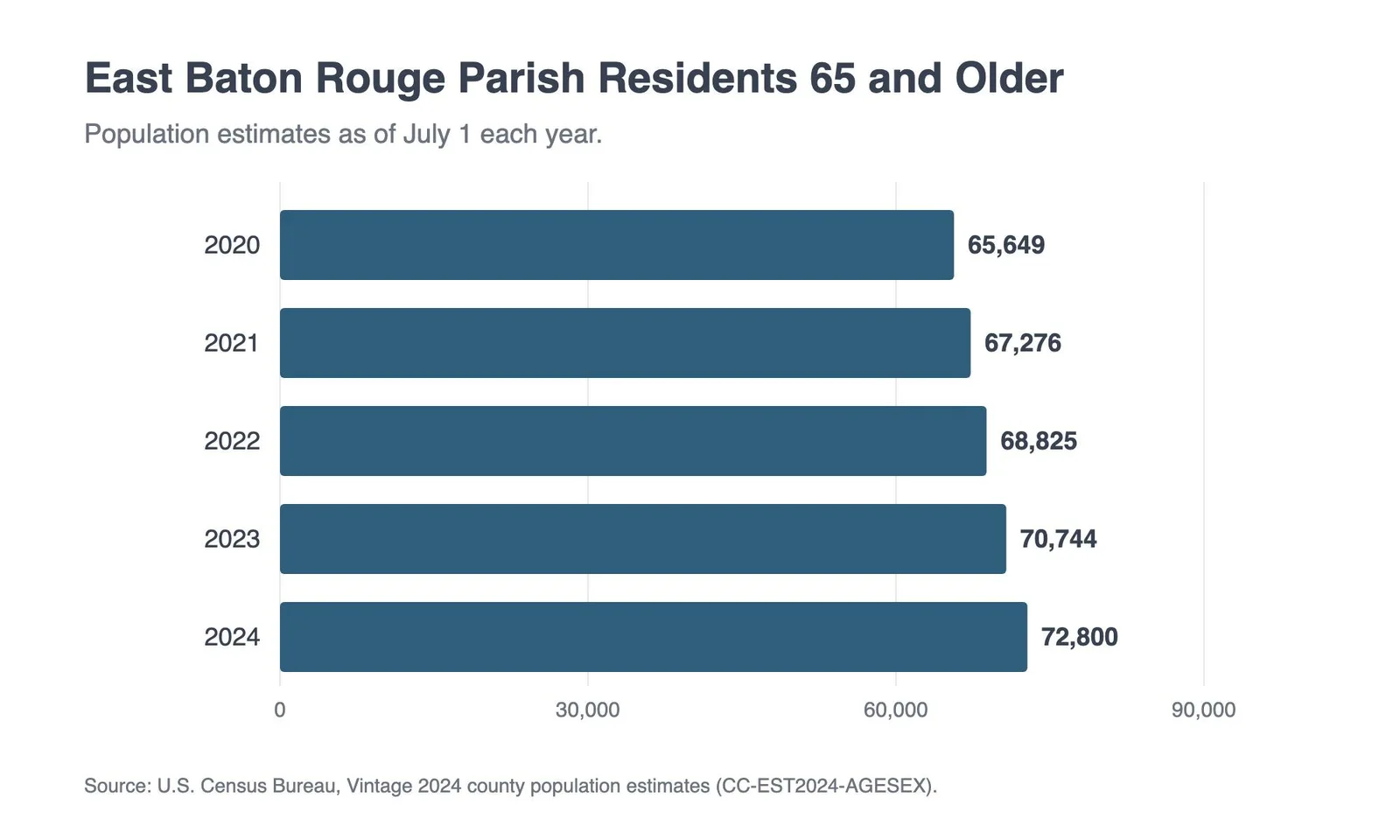
East Baton Rouge Parish added about 7,000 residents age 65 and older in four years.
Over the same years, the parish’s total population dipped slightly, from 455,916 to 453,022. More residents are older, and many are reaching the point where driving to the doctor is no longer a given.
Build a Ride Plan Before You Need It
The best time to plan rides is before the first missed appointment. A few steps make the difference.
- Keep a shared calendar of every appointment, including the address, check-in time, and expected visit length.
- Note the details a driver needs to know, such as a walker, a wheelchair, oxygen, or difficulty with steps.
- Decide who covers which days. Family members who work can often handle the return trip even when they cannot do the morning drop-off.
- Plan the ride home as carefully as the ride there, and ask the office if the patient will need someone to go home with them after a procedure.
- Ask each office how far ahead it wants arrival for paperwork, labs, or imaging.
Writing this down once saves dozens of phone calls later. It also helps siblings who live out of town see where they can help.
Talk About Rides Before the Keys Come Up
Many families wait until a parent has already stopped driving to talk about rides. It is easier to start sooner, while the parent is still part of the decision. Ask which appointments matter most to them, which days they prefer, and who they are comfortable riding with.
That conversation also protects a parent’s independence. A ride plan they helped build feels like support, not supervision, and they are more likely to speak up when a trip is coming instead of quietly skipping it.
What to Ask Before Booking a Ride
When family cannot cover every trip, a medical ride service can fill the gaps. A few questions can help you sort through your options. Start with the level of help: does the driver assist from the door to the car and from the car to the check-in desk, or only curb to curb?
Next, find out whether the service plans pickup around the appointment time and returns you home. Check how it handles walkers and wheelchairs, and confirm the price before the ride is booked rather than after.
Local services answer these questions differently. In Baton Rouge, for example, Cura Mobility Services offers door-to-door rides to doctor and specialist visits, with help from the front door to the check-in desk, pickups planned around the appointment, and a price confirmed before booking. Family members can also arrange rides on a parent’s behalf.
Where Family Transportation Is Heading
The research points in one direction. People live for years after they stop driving; the number of older residents in parishes like East Baton Rouge is rising, and people with health conditions that make getting there harder are among the most likely to miss care.
Those trends put more weight on planning than on any single solution. Some families will cover every ride themselves. Others will mix family help with a service for the days nobody is free. Either way, the appointment that gets planned is the one that gets kept.